
Access control and asset management are often the weak link in facilities operations. Managing audit trails, keeping track of lost or damaged assets, issuing badges manually and enforcing consistent governance: these are precisely the areas where inefficiencies and security vulnerabilities emerge.
With the latest Sine by Honeywell release, there is a clear focus on eliminating these gaps. The aim: a unified, industry-leading system for asset and access governance that combines speed, layered clearance hierarchies and full compliance.
From an advanced asset register to deeper integrations across the Honeywell Commercial Security ecosystem, this release introduces enterprise-grade tools designed to reduce risk, enhance operational efficiency and make visitor and contractor management seamless for facilities, security and front-of-house teams.
If you’ve ever stood at a key cabinet juggling tags or manually assigning radios, scanners, and laptops to contractors, you know how quickly asset management can turn into a bottleneck. Or worse, a security liability. Our groundbreaking new asset register, Assets, delivers a streamlined, digital-first alternative.
Facilities can now log and assign day-to-day items (keys, radios, equipment, vehicles, even access cards) directly through Sine. Issuing becomes as simple as scanning a tag and handing over the asset. Items can be retained across multiple visits or sites, and then automatically reconciled at
check-out.
The result? A complete, verifiable chain of custody for every item, without the cost and overhead of a traditional cabinet solution.

For environments requiring granular, real-time control, Smart Assets introduces a brand new security standard. By linking contractor check-in and check-out directly with the activation of RFID and proximity cards, access becomes dynamic and risk-free.

Paired with features like geofencing, check-in approvals, and invitation-only access, Smart Assets creates a multi-layered security framework, where credentials only function for the right person, at the right time, in the right location. If an induction check fails, for example, perhaps due to an expiry, the system automatically deactivates that contractor’s credentials.
The result is dramatically reduced exposure to risks such as tailgating, lost badges or unauthorized visitor access.
Sine’s cutting-edge Secure Bridge technology makes integrating cloud visitor management with on-premise access control dramatically faster and safer.
Historically, these integrations required clunky third-party middleware or inbound firewall rules, which was an operational headache for IT and security teams. Secure Bridge eliminates those pain points. No more inbound firewall ports. No external middleware. Users get full and flexible control over tunnel placement within their infrastructure.
That means, for the first time ever, IT no longer has to compromise network architecture or security to enable connectivity. Secure Bridge enables a secure, flexible pathway to link Sine with platforms like Honeywell ProWatch, Gallagher, and Inner Range, accelerating deployment while safeguarding clients’ IT environments.
Viewed within the larger Honeywell Commercial Security ecosystem, Sine becomes far more than a visitor and asset management platform. With new native integrations to LenelS2 Elements and ProWatch, Sine is now positioned as an enterprise-ready access control layer across multiple systems.
Some of these industry-leading features include:

This ecosystem-first approach allows security leaders to manage credentials, assets and access governance from a single, fully-integrated platform.

Instead of treating access as a flat, horizontal clearance model, Sine by Honeywell is built around layered, role-specific controls, which gives facility managers far greater, more granular control.
By tailoring access permissions to the exact zones and tasks relevant to each visitor or contractor, organizations reduce risk while improving their operational flow. Sensitive areas remain protected, contractors move quickly to where they need to be, and check-in processes are simplified. All without compromising safety.
This is access governance redefined: frictionless for users, robust for operators.
As every facility manager knows, at the heart of secure facility management is a clear, verifiable audit chain. With Sine, every access event is logged, every device registered, every check-in and check-out stored in the cloud.
This provides a transparent record of who was onsite, when, and with what assets. It also strengthens accountability, simplifies compliance reporting, and makes audits significantly less resource-intensive.
And with this digital audit trail comes additional insight. The more you know about patterns of movement and asset use, the better you can optimize site security and streamline visitor experiences.
Whether your goal is to replace a manual key cabinet, automate contractor access or unify security across multiple sites, Sine’s groundbreaking new features are built to scale with enterprise demands.
See how Sine by Honeywell delivers layered access, robust governance and real-time visibility for every single asset.
Managing the flow of people in and out of a building shouldn't feel like a full-time job, but it often does for many facilities and security teams.
From visitors and contractors to deliveries, audits, compliance demands and evolving security protocols, there's a constant need to balance a welcoming environment and positive user experience with uncompromising safety and security.
If your current system involves paper sign-ins, multiple spreadsheets or access badges floating around unaccounted for, you’re not just overwhelmed — you’re at risk.

A good visitor and contractor management system is like a universal remote for your building’s access, bringing together check-ins, access permissions and real-time monitoring in one simple, secure and seamless solution.
But too often, contractors arrive unexpectedly, and no one knows who approved them, or a visitor skips the line entirely because the receptionist stepped away. Or worse, you find out an incident occurred in a mechanical room, and need to find out which contractors were on-site at that time.
While managing visitor and contractor access seems simple, it rarely is. Do any of these pain points sound familiar?


Whether overseeing a corporate high-rise, a healthcare campus, an educational facility or an industrial site, one thing is clear: Managing access has become far more complex than simply handing out visitor badges.
Today’s solutions need to go beyond basic check-ins to keep up with modern security and compliance and actively drive efficiency, safety and confidence at every entry point.
Sine by Honeywell reimagines how organizations manage contractors and visitors, replacing manual processes with a streamlined, automated system that integrates effortlessly into your existing access control infrastructure. From preregistration and mobile credentialing to real-time monitoring and audit-ready reporting, Sine helps you reduce administrative overhead, eliminate bottlenecks and meet compliance standards without sacrificing the user experience.
Ready to modernize your access management strategy? Dive into our whitepaper to see how Sine delivers smarter, simpler and more secure access control.

Discover Sine by Honeywell — the smart choice for building security that offers safety, compliance and a seamless user experience.
In today's increasingly digital business environment, an online induction system is a fundamental tool that can help you with successful onboarding and compliance practices.
An online induction system is a digital platform designed to standardize and streamline the induction process for new employees, contractors, and visitors. This system can help confirm that everyone is promptly familiarized with the company's policies, safety rules, and job-specific requirements before they commence their duties. New digital systems effectively replace traditional face-to-face or paper-based induction methods with a more efficient, consistent, and increasingly reliable digital solution.
One of the unique features of an online induction system is its flexibility and accessibility. It allows users to complete their induction anytime and from anywhere, thus helping to cater to the needs of remote workers, part-time employees, and on-the-go contractors. The ability to complete inductions at their own pace also means users can absorb and retain information more effectively.
Online induction systems, also make the induction process contactless, thereby promoting a safer workplace. Moreover, they contribute to an evolving digital world by eliminating the need for paper-based inductions.
Below, we'll take a look at some of the must-have capabilities to look for when choosing a digital induction system for your worksite.
Contractor inductions are more than just a box-ticking exercise; they are a useful element in promoting workplace compliance. They can help set the foundation for how contractors should act when present in your workplace and they can assist you in verifying that your contractors are familiar with and have agreed to your company's legal, ethical, and safety policies and standards.
For businesses, compliance goes beyond just following laws—it involves adhering to a wide range of corporate, legal and regulatory requirements, which vary depending on the industry and jurisdiction. These may include health and safety regulations, industry-specific guidelines, data protection laws, and ethical standards.
Contractor inductions serve as the first step in helping to make sure that everyone working in or with the company understands these requirements. A well-structured and thorough induction program can help certify that contractors are aware of the company’s policies, procedures, and expectations. It can provide them with the necessary knowledge and tools to perform their tasks while adhering to the required standards, thus helping to reduce risks of non-compliance.
Through the induction process, contractors are not only educated about their obligations but can also get a clearer understanding of the company's commitment to compliance. It can help foster a culture of compliance within the organization, where everyone understands their role in upholding the company's standards.
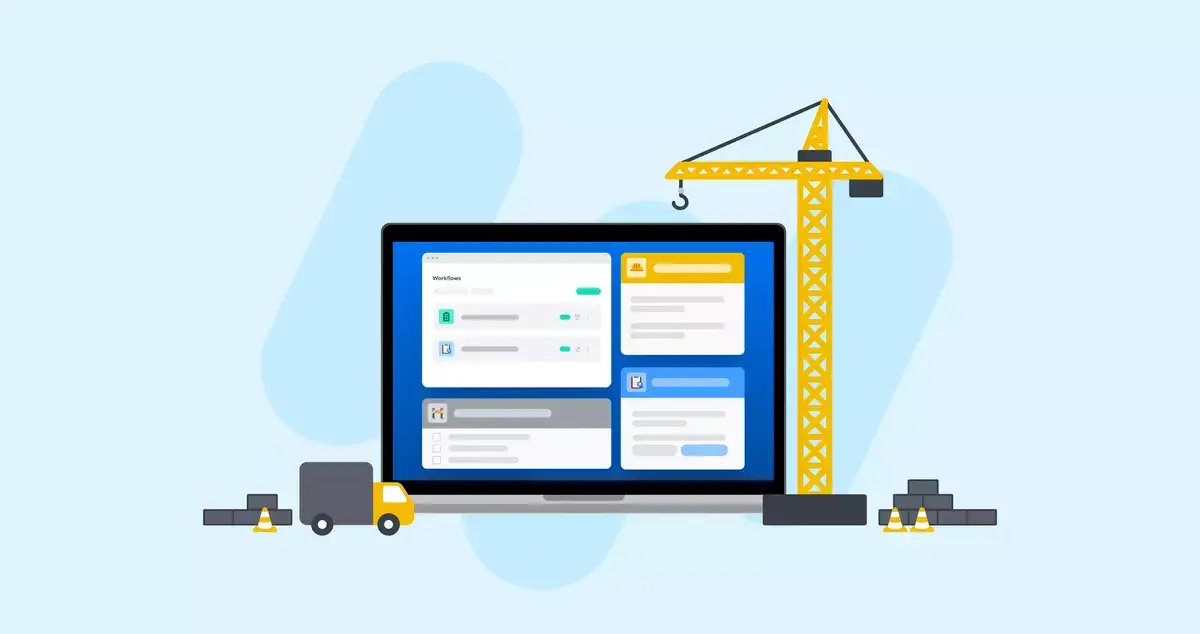
Transitioning from a traditional to digital induction processes has many benefits, including the potential for increased efficiency, cost-effectiveness, and improved record-keeping.
Traditional inductions may be time-consuming, often involving a considerable amount of manual work. But digital induction systems may be able to help automate many of these tasks, assisting in reducing the time it takes to onboard new employees or contractors. They allow for a more streamlined process, freeing up valuable time for HR teams and managers to focus on other critical areas. They can even give a new employee a sense of the company culture and be tailored to make people feel more welcomed before stepping on site.
Implementing an online induction system can also help foster a culture of continuous learning and improvement within the organization. By providing access to resources and tools for ongoing learning, companies can empower their workforce to stay up-to-date with industry trends, regulatory changes, and best practices. This not only benefits individual employees in their professional growth but also contributes to the overall success and adaptability of the organization in a rapidly evolving business landscape.
Furthermore, digitizing the induction process may prove more cost-effective. Traditional inductions often require physical resources, such as printed materials, and may necessitate dedicated time from staff to deliver the training. A digital system, on the other hand, may be able to help reduce these costs by delivering the training online and automating the process.
In terms of record-keeping, digital inductions can also provide a unique convenience. They can track and record each induction, making it easier to monitor completion rates, verify that all requirements have been met, and maintain a clear audit trail for compliance purposes.
Finally, digital inductions are a key enabler for remote working arrangements. With more businesses adopting flexible and remote working, having an induction process that can be online is a major advantage. Digital inductions allow new hires or contractors to complete their training from the comfort of their own homes or any location with internet access. Digitizing the induction process can help offer businesses a more effective, efficient, and flexible way of onboarding new staff or contractors. It not only improves the quality and consistency of the induction process but also provides a better experience for the individuals involved, setting them up for success from day one.

It's crucial to understand the key features that make an online induction system effective for your company. Below are some critical features to look for when choosing your online induction system.
One of the most critical features of an online induction system is a user-friendly interface. A complex, difficult-to-navigate system can discourage users and hinder the onboarding process. On the other hand, an intuitive, easier-to-use interface can significantly enhance engagement and information retention.
With a user-friendly interface, users can navigate through the system with ease, access necessary information, and complete their induction without unnecessary stress or confusion. This reduces the time and resources spent on training and troubleshooting, making the induction process more efficient for both administrators and users.
Every company is unique, and so are its induction needs. Therefore, an effective online induction system should offer customizability and scalability. Customizability allows you to tailor the content to suit your company's specific requirements, catering to different roles, departments, and locations. This allows your induction process to be relevant, targeted, and effective.
Scalability, on the other hand, allows your online induction system to grow and evolve along with your business. As your company expands, so should your induction system, seamlessly accommodating more users, more content, and more complex organizational structures.
There are a variety of different tailorable features to look out for when choosing an online induction system, namely:
In today's digital age, with the rising trend of remote working and Bring Your Own Device (BYOD) policies, mobile compatibility is no longer just an added advantage—it's often a necessity. When choosing an online induction system, it's essential to establish that it's compatible with various mobile devices.
Mobile compatibility offers the flexibility that modern workers need. With an online induction system that works seamlessly on smartphones and tablets, new employees, contractors, and visitors can complete their induction anytime, anywhere. This flexibility is particularly beneficial for remote workers and contractors who may not have regular access to a desktop computer.
Furthermore, a mobile-compatible online induction system can help verify that everyone, regardless of their location or the device they're using, can access the same information and complete the induction process. This not only enhances accessibility but also promotes consistency across the board.
An online induction system with mobile compatibility can significantly streamline the induction process, making it more efficient and user-friendly. In the increasingly mobile world we live in, this feature can be key to delivering a smooth and effective induction experience.

The Sine Pro mobile app can help provide a comprehensive solution for these challenges, transforming the traditional induction process into a contactless, streamlined operation. It allows companies to tailor their induction workflows to their specific needs, helping to improve the likelihood that all necessary training and documentation is in place before a worker sets foot on site.
The power of this software lies in its capacity to automate some of these essential procedures, helping to reduce the likelihood of human error and assisting you with enhancing workplace safety.
This is a new era for workplace safety and induction processes, one in which digital solutions are leading the way. As we navigate through these changing times, it's clear that innovations like these are not just useful – they are essential.
Experience the Honeywell Forge Visitor and Contractor Management difference and discover how it can streamline your induction processes by booking a demo with a team member today!